Betfair NFL Exchange in the UK: Back and Lay Betting Mechanics
 Available in US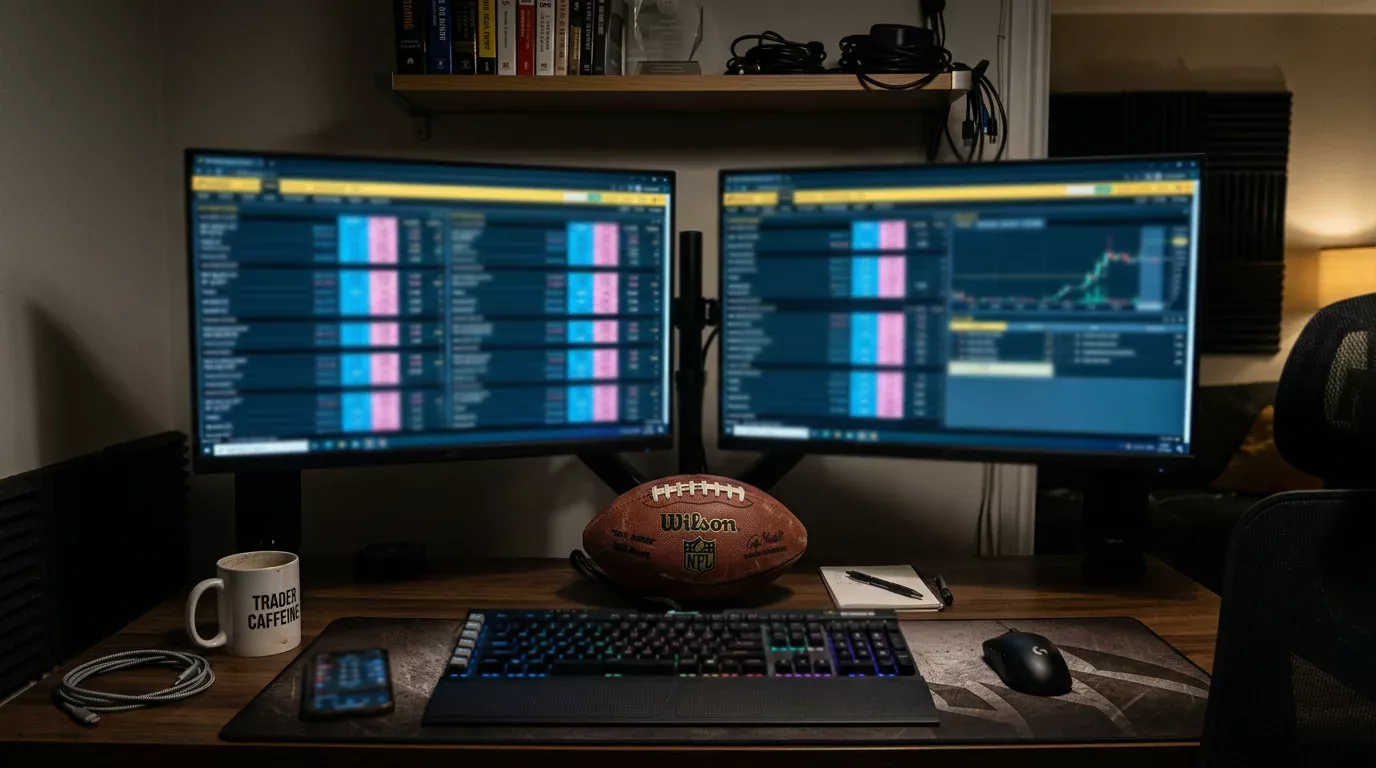
The first time I laid a team on the Betfair Exchange — actively betting against them to win — it felt transgressive. I’d spent years backing teams at traditional bookmakers, and the idea that I could essentially become the bookmaker, setting my own price and waiting for someone to match it, fundamentally changed how I think about NFL betting. Exchange betting isn’t for everyone, but for punters who want to trade NFL markets rather than simply bet them, it’s the most powerful tool available in the UK.
Betfair’s Exchange operates on a fundamentally different model from traditional sportsbooks. There’s no bookmaker setting odds and taking the other side of your bet. Instead, you’re betting against other people. Every wager requires two parties: someone who thinks an outcome will happen (the backer) and someone who thinks it won’t (the layer). Betfair provides the marketplace and takes a commission on net winnings — typically 2-5% depending on your activity level — rather than building margin into the odds themselves.
Betfair Exchange vs. Traditional NFL Sportsbooks
The UK sports betting market generates approximately 2.48 billion pounds in annual gross gambling yield, and traditional sportsbooks capture the vast majority of that. Exchange betting remains a niche within the market, but the niche offers structural advantages that matter for NFL wagering.
The most significant difference is in the odds. Because there’s no bookmaker margin built into exchange prices, the odds available on Betfair are typically better than equivalent prices at traditional sportsbooks. A team priced at 10/11 (1.91) at a conventional bookmaker might be available at 19/20 (1.95) or even evens (2.00) on the exchange. Over hundreds of bets, that pricing advantage compounds into a meaningful edge.
The trade-off is certainty. At a traditional bookmaker, your bet is guaranteed to be matched — the bookmaker always takes the other side. On the exchange, your bet only executes if another user matches it. For popular NFL markets like the Super Bowl moneyline, liquidity is typically sufficient to fill most bets within seconds. For niche markets like Week 5 player props, the liquidity may be sparse, and your bet might sit unmatched if no one is willing to take the other side at your requested price.
Another key difference: on the exchange, you can lay as well as back. At a traditional bookmaker, you can only bet on something to happen. On Betfair, you can bet against an outcome too. If you think the Buffalo Bills will lose, you don’t need to figure out which specific team will beat them — you simply lay the Bills. If any opponent beats them, your lay bet wins. This is a powerful tool for situations where you have a strong view against a team but no strong view in favour of any particular opponent.
Back and Lay Betting on NFL Markets
I remember staring at the Betfair interface the first time, seeing two columns of numbers — blue and pink — and not understanding why there were two prices for every selection. Here’s what would have saved me 20 minutes of confusion.
The blue column is the “back” price — the odds at which you can bet on an outcome to happen. Backing the Chiefs at 1.85 means you think they’ll win, and you’re paid at 1.85 decimal odds if they do. This is equivalent to placing a bet at a traditional bookmaker.
The pink column is the “lay” price — the odds at which you can bet against an outcome. Laying the Chiefs at 1.90 means you’re betting they won’t win. If the Chiefs lose, you profit. If the Chiefs win, you pay out at the lay odds. Your liability — the maximum amount you could lose — is calculated automatically and displayed before you confirm the bet.
The gap between the back and lay prices is the spread, which functions similarly to a bid-ask spread in financial markets. A tight spread (back 1.85 / lay 1.87) indicates a liquid market with competitive pricing. A wide spread (back 1.80 / lay 2.00) indicates thin liquidity where fewer users are actively trading. NFL moneyline markets for popular games typically show tight spreads, while mid-week futures markets can be wider.
The practical workflow: for most NFL bets, I check the exchange back price first and compare it to the best traditional bookmaker price. If the exchange offers better odds (which it usually does for main markets), I back on the exchange. If the exchange liquidity is thin and the price isn’t reliably available, I fall back to the traditional bookmaker. This hybrid approach captures the best price available across both market types.
NFL Liquidity on Betfair: What UK Punters Can Expect
The UK generates roughly 1.2 million monthly search queries related to the NFL — a figure that represents about 13% of the volume the Premier League attracts. That ratio roughly maps to the liquidity difference between NFL and football markets on Betfair. Premier League exchange markets are deep and competitive; NFL exchange markets are functional but significantly thinner.
For Super Bowl moneyline and spread markets, liquidity is substantial. Six-figure matched volumes are common in the weeks leading up to the game, and prices track closely with traditional bookmaker lines. Conference championship and playoff games also attract healthy exchange interest. Regular-season games are more variable — primetime fixtures (Thursday Night, Sunday Night, Monday Night) draw the most exchange activity, while early Sunday games between lower-profile teams may have limited liquidity.
Player prop markets on the exchange are essentially nonexistent for NFL. This is a significant limitation for punters who rely heavily on prop betting — the exchange model requires two-way interest to function, and the granularity of NFL props means there simply aren’t enough users on both sides of specific player yardage or touchdown markets to sustain a tradeable exchange market.
Futures markets — Super Bowl winner, conference champions, division winners — offer better exchange liquidity than you might expect. These markets are open for months, which allows volume to accumulate gradually. I’ve found that the exchange odds on NFL futures are consistently better than traditional bookmaker prices, often by 10-15% in implied probability terms, making futures the single strongest use case for exchange betting in the NFL space.
Trading NFL Markets: Pre-Game and In-Play
Trading — backing at one price and laying at a different price to lock in profit regardless of the outcome — is the exchange feature that separates it most clearly from traditional betting. It’s how financial traders approach markets, applied to sport.
Pre-game trading works like this: you back a team at 3.00 on Tuesday, and by Sunday morning, favourable news has moved the price to 2.40. You then lay the same team at 2.40, locking in a guaranteed profit. If the team wins, your back bet pays out more than your lay liability. If the team loses, your lay winnings exceed your back stake loss. The profit is modest per trade, but it’s risk-free once both sides are placed.
In-play trading is faster and higher-risk. NFL games produce dramatic swings in win probability with every possession, and the exchange prices move in real time to reflect those swings. A team that falls behind 14-0 in the first quarter might see their price drift from 1.60 to 3.50. If you believe they’ll rally, backing at 3.50 and then laying when they score to close the gap can produce significant trading profits. The risk: if they don’t rally, your back bet loses. In-play trading requires fast decision-making, a reliable internet connection, and the discipline to set stop-losses — and it’s not something I’d recommend for anyone in their first season of exchange betting.
The commission structure at Betfair — typically 2-5% of net winnings per market — is the cost of trading. Because commission only applies to net profits (not gross turnover), a successful trade that nets 20 pounds of profit might incur 60 pence to 1 pound in commission. This is significantly cheaper than the embedded margin at traditional bookmakers, which is why serious NFL bettors who trade frequently often find the exchange more cost-effective despite the learning curve.
Can I lay NFL teams on Betfair from the UK?
Yes, laying NFL teams on the Betfair Exchange is available to UK customers. You can bet against any team in NFL moneyline, spread, and totals markets. Your maximum liability is calculated and displayed before you confirm the lay bet. Laying is available both pre-match and in-play for markets with sufficient liquidity.
Is there enough liquidity on Betfair for NFL betting?
Liquidity varies by game and market type. Super Bowl, playoff, and primetime regular-season games offer strong liquidity with competitive back-lay spreads. Mid-table regular-season games have thinner markets, and player prop liquidity is essentially nonexistent on the exchange. NFL futures markets carry better liquidity than single-game markets due to the longer trading window. For main match markets, the exchange is a viable primary platform for most NFL bets.
Published by the Best bet for nfl team.