Super Bowl Betting in the UK: Odds and Prop Bet Markets
 Available in US
The Super Bowl is not just the biggest game in American football – it is the single biggest betting event on the planet. US sportsbooks expected a record $1.76 billion in legal wagers on Super Bowl LX alone, up from $1.39 billion the previous year on Super Bowl LIX. And it is not just an American phenomenon anymore. In the UK, Super Bowl viewership hit a peak of 1.73 million during the 2024 game, with a staggering 91% year-on-year growth among viewers under 35. If you want to lock in value early in the season, exploring the NFL futures betting markets for division winners and MVP candidates is a smart move.
I have bet on every Super Bowl since I started covering NFL markets nine years ago. Some of those bets were sharp; a few were terrible. What I have learned is that the Super Bowl is a fundamentally different betting proposition from a regular-season NFL game – the market is bigger, the public money is heavier, the prop bet menu is absurdly deep, and the timing dynamics reward patience over impulse. This guide covers how to navigate all of it from the UK.
UK Super Bowl Betting Trends and Odds Landscape
The numbers behind Super Bowl betting are staggering, and they tell a story of a market that keeps setting records year after year. Americans wagered $1.39 billion legally on Super Bowl LIX in 2025, and the projection for Super Bowl LX climbed to $1.76 billion. That is not total handle across all sports – that is one game, one evening, one event. Bill Miller, the President and CEO of the American Gaming Association, captured the scale when he described it: no single event brings fans together like the Super Bowl, and the record betting figures reflect how deeply sports wagering has become part of the experience.
In the UK, the Super Bowl’s growth trajectory mirrors what is happening in the US but from a smaller base. Super Bowl LVIII in 2024 drew a peak TV audience of 1.73 million British viewers – a 48% increase from the previous year. The under-35 demographic grew by 91%, which signals that the Super Bowl is capturing a younger audience in the UK at an exceptional rate. These are not casual viewers; they are engaged fans who stay up past midnight to watch the game live and, increasingly, to bet on it in real time.
Henry Hodgson, General Manager of NFL UK, has pointed to the “social engagement through Super Bowl week” as evidence of the sport’s growth in the UK. He is right, but the betting engagement is equally telling. UK bookmakers now offer more Super Bowl markets than they do for most domestic football matches, with some operators listing 200-plus betting options for the big game. The commercial logic is straightforward: the Super Bowl attracts casual bettors who might never place an NFL wager during the regular season, and those casual bettors are exactly the high-margin customers that sportsbooks want to attract.
For serious punters, this influx of casual money is the opportunity. The Super Bowl is the one NFL game where public bias is most extreme, where novelty bets attract disproportionate volume, and where the core markets (spread, moneyline, total) can be mispriced because the bookmaker’s attention is divided across hundreds of prop lines.
Types of Super Bowl Bets Available at UK Bookmakers
If the regular NFL season offers you a buffet, the Super Bowl is a ten-course meal with a dessert trolley the size of a small car. The range of betting markets available for the big game at UK bookmakers dwarfs anything you see during a standard Week 12 matchup. Understanding the categories helps you focus on the markets where your analysis actually gives you an edge.
The core markets are the same as any NFL game: spread, moneyline, and total. These are the highest-volume markets and the ones where the sharpest money concentrates. The Super Bowl spread typically lands between 1.5 and 6.5 points, depending on the matchup. The total tends to sit between 43 and 52. These markets are the tightest-priced (lowest margin) and the hardest to beat, because the bookmaker devotes their best traders and models to getting them right.
Futures markets cover long-term outcomes decided before or during the game: Super Bowl MVP, first touchdown scorer, and team-specific outcomes like “will either team score 30 or more points.” MVP is a popular Super Bowl bet in the UK – the market overwhelmingly favours quarterbacks, and with good reason, as a quarterback has won the award in the vast majority of Super Bowls. The value, when it exists, tends to be on non-quarterback candidates: a dominant defensive player, a running back who controls the clock, or a wide receiver who catches three touchdowns.
Game props cover specific in-game events: will there be a safety, will the game go to overtime, how many total touchdowns will be scored, what will be the longest field goal. These markets carry wider margins than the core lines, but they also receive less sharp attention, which means the bookmaker’s pricing is sometimes less refined. Game props are where patient analysis can find genuine value, particularly on markets that involve scoring thresholds or specific game-flow scenarios.
Exotic and novelty bets round out the menu. The coin toss (heads or tails) is a true 50/50 proposition, and the odds should reflect that – any deviation is the bookmaker’s margin. Halftime show bets (which songs will be performed, how long will the performance last) are entertainment wagers with no analytical basis. They are fun for parties but carry wide margins and should be treated as what they are: a bit of entertainment, not an investment.
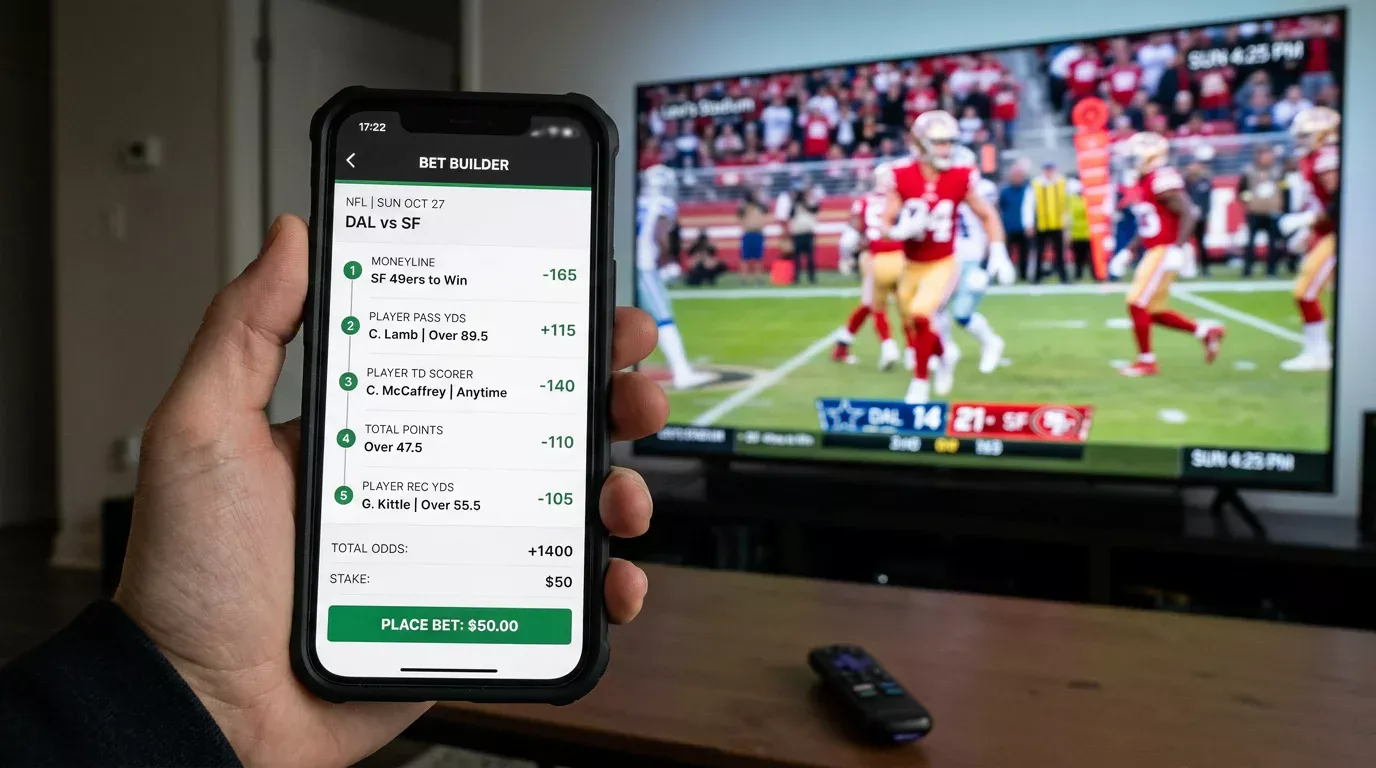
Same-game multis (bet builders) are especially popular for the Super Bowl. Combining a team to cover the spread with the total going under and a specific player to score a touchdown creates a high-odds, high-engagement bet that keeps you invested in multiple aspects of the game simultaneously. The bookmaker adjusts the odds for correlation between legs, so the payout is not simply the product of individual prices – but the format is tailor-made for the Super Bowl experience, where you want a reason to care about every play from start to finish.
Prop Bets: From MVP to Coin Toss and Halftime Show
Prop bets are where the Super Bowl becomes a different animal entirely. During a regular-season game, you might find 15-20 player prop markets at a UK sportsbook. For the Super Bowl, that number can exceed 100. Quarterback passing yards, rushing yards for each running back, receiving yards for every eligible receiver, interceptions thrown, sacks recorded, tackles made – the depth is extraordinary.
The reason the prop menu expands so dramatically is simple: demand. Casual bettors who tune in once a year for the Super Bowl want specific, easy-to-understand wagers that keep them engaged throughout the game. “Will Patrick Mahomes throw over 275.5 passing yards?” is more accessible than “Kansas City -2.5” for someone who does not follow the sport week to week. Bookmakers accommodate this demand with extensive prop menus, knowing that the margins on player props are typically 6-10% – significantly wider than the 4-5% on the core spread and total.
For analytical bettors, that wider margin creates a paradox: the edge per bet on props is potentially larger (because the pricing is less efficient), but you need to overcome a bigger margin to be profitable. My approach is to focus on a small number of props where I have a genuine informational or analytical edge, rather than scattergunning bets across the full menu. Quarterback passing yards and running back rushing attempts are the two markets I find most predictable, because they correlate strongly with game flow – a team that falls behind passes more, a team that leads runs more.
Coin toss bets deserve a specific mention because they are uniquely popular at the Super Bowl and uniquely simple to evaluate. The coin toss is a 50/50 event. Any odds worse than evens (1/1) represent the bookmaker’s margin and offer negative expected value by definition. You cannot have an edge on a coin toss. Treat it accordingly – a laugh with mates, not a serious wager. For deeper coverage of NFL futures markets including Super Bowl winner and MVP odds, the dedicated guide covers the full landscape.
How to Find and Compare Super Bowl Odds in the UK
Every year, I compare Super Bowl odds across at least five UK bookmakers on the morning the lines open, and every year, I find meaningful discrepancies. The spread might be -1.5 at one operator and -2.5 at another. The total might differ by a full point. Player prop lines can vary by 10-15 yards on passing and rushing markets. These gaps exist because different operators use different models, weight different factors, and manage their risk in different ways.
William Hill accounts for 37.83% of PPC clicks in UK sports betting, but click-share does not correlate with best odds. The operator with the most advertising spend is rarely the one offering the tightest Super Bowl margins. Comparing odds across platforms takes ten minutes on Super Bowl week and can save you real money on every bet you place.
The overround on Super Bowl markets is typically lower than regular-season games because the volume of bets is so high. Bookmakers can afford tighter margins when the handle runs into the millions. This benefits punters – the Super Bowl spread, moneyline, and total are often the best-priced NFL markets of the entire season. Take advantage of that. If you are going to bet on one NFL game all year, this is the one where the odds are working least against you.
One technique I use for Super Bowl odds comparison: convert every selection to implied probability and compare the implied probabilities rather than the raw odds. A spread of -2.5 at 10/11 versus -2.5 at 5/6 translates to implied probabilities of 52.4% versus 54.5%. That 2.1% gap is the difference in margin you are paying. On a 50-pound bet, it is a meaningful amount. Fractional odds can obscure these differences; implied probability makes them visible.
When to Place Your Super Bowl Bets: Timing and Line Value
The two weeks between the conference championships and the Super Bowl are the longest gap in the NFL calendar. That gap creates a distinct timing dynamic for bettors. Opening lines appear within hours of the conference championship games, and then they sit there, absorbing money for fourteen days. The line movement during this period follows a predictable pattern, and understanding it is one of the most reliable edges in Super Bowl betting.
In the first 48 hours, sharp money lands on whichever side the professional bettors favour. This initial move is typically the sharpest adjustment the line will see. Over the next ten days, public money gradually accumulates on the more popular team – usually the one with the bigger name, the flashier quarterback, or the better regular-season record. This public money pushes the line in their direction, often by a full point or more.
If you agree with the sharp side, bet early – before the public money moves the line against you. If you want to fade the popular team, wait until Super Bowl week itself, when the public money peaks and the line reaches its most inflated point. I have found that the best value on contrarian Super Bowl bets tends to appear on Thursday or Friday of Super Bowl week, when the last wave of casual money hits the market.
Prop bet lines follow a different rhythm. Many player prop markets do not appear until Monday or Tuesday of Super Bowl week, and they adjust rapidly in the first 24 hours as early bettors probe the lines. By Thursday, most prop lines have stabilised. If you are targeting props, do your analysis early but place your bets later in the week when the lines have settled and you can be confident you are not catching a line in mid-adjustment.
One timing trap to avoid: do not place your Super Bowl bets in the final hour before kickoff. The last-minute rush of public money creates chaotic line movement, and you are unlikely to get a better price than you would have found 48 hours earlier. The exception is if late-breaking news (a key player ruled out, a significant weather change at the venue) shifts the fundamental picture – in which case, the line movement itself is the information, and acting quickly may be warranted. Absent that kind of news, the Friday before the Super Bowl is my preferred deadline for all pre-match positions.
Watching the Super Bowl in the UK: Channels, Kick-Off Times, and Streaming
The Super Bowl kicks off late by UK standards – typically around 11:30 PM on a Sunday night. The game itself runs three and a half to four hours, which means you are looking at a 3 AM to 3:30 AM finish. For live bettors, this is a genuine consideration. Four hours of concentrated live betting, starting near midnight, demands a level of alertness that most people simply cannot maintain without preparation.
Sky Sports is the primary UK broadcaster, offering the full game live with pre-game and post-game coverage. ITV has periodically picked up free-to-air Super Bowl rights, making the game accessible to viewers without a Sky subscription. NFL Game Pass on DAZN provides an alternative streaming option. For live betting purposes, the broadcast with the shortest delay is your best choice – even a three-second lag between the live feed and the sportsbook’s data puts you at a disadvantage when placing in-play bets.
Super Bowl LVIII drew that record 1.73 million peak UK audience, and the numbers continue to climb. If you are watching with friends or at a party, the atmosphere is brilliant – but it is also the worst environment for serious live betting. Noise, conversation, and alcohol all degrade your decision-making. If you plan to bet live on the Super Bowl, I would suggest placing your pre-match bets before the party starts and saving any live betting for quiet, focused moments during the game, or simply not live-betting at all and enjoying the spectacle.
Super Bowl Party Betting: Fun Wagers for Casual Fans
Not every Super Bowl bet needs to be a calculated, data-driven position. The Super Bowl is, for millions of UK viewers, a social event first and a sporting contest second. Party betting – casual wagers shared among friends – is part of the fun, and there is nothing wrong with treating it as entertainment rather than investment.
The best party bets are the ones everyone can follow and cheer. First touchdown scorer is perfect for this: each person in the room picks a different player, throws in a fiver, and whoever’s player scores first takes the pot. It is simple, dramatic, and resolved relatively early in the game. Anytime touchdown scorer works similarly but spreads the excitement across the full four quarters.
Quarter-by-quarter scoring props are another strong party format. Will the first quarter total go over or under 10.5? Will the third quarter be the highest-scoring quarter? These bets keep the group engaged during slower stretches of the game and create natural discussion points between plays.
The coin toss is the classic party bet, and it is the only wager in the Super Bowl that is genuinely a coin flip. As Bill Miller of the AGA noted, legal sports betting “enhances the fun and friendly competition” that makes NFL traditions special – and the coin toss bet captures that spirit perfectly. Just do not stake more than you would spend on a round of drinks, because you are betting at negative expected value by definition.
One suggestion from experience: if you are hosting or attending a Super Bowl party, set a collective budget for party bets and treat it as the evening’s entertainment expense – like paying for pizza and drinks. This keeps the betting lighthearted, prevents anyone from chasing losses as the night wears on, and ensures the focus stays on enjoying the game together rather than sweating every possession for financial reasons. Before placing your Super Bowl wagers, compare odds across the best NFL betting sites in the UK to ensure maximum returns.
FAQ
When does Super Bowl betting open at UK bookmakers?
Super Bowl spread, moneyline, and total markets typically open within hours of the conference championship games, approximately two weeks before the Super Bowl itself. Futures markets for the Super Bowl winner are available year-round, often opening immediately after the previous Super Bowl concludes. Player prop markets usually appear on Monday or Tuesday of Super Bowl week.
What are the most popular Super Bowl prop bets in the UK?
First and anytime touchdown scorer bets are the most popular player props among UK punters. Quarterback passing yards, total touchdowns scored, and MVP winner are also heavily wagered. Novelty bets like the coin toss result and halftime show props attract casual bettors, though they carry wider margins and offer no analytical edge.
Can I bet on the Super Bowl halftime show from the UK?
Some UK bookmakers offer halftime show prop bets, including which songs will be performed, how long the performance will last, and whether a guest performer will appear. These markets are entertainment wagers with no predictive basis – the margins are wide, and outcomes are essentially impossible to forecast. Treat them as fun rather than serious bets.
What time does the Super Bowl kick off in the UK?
The Super Bowl typically kicks off at approximately 11:30 PM UK time on a Sunday evening. The game runs for three and a half to four hours, finishing around 3:00 to 3:30 AM on Monday morning. Plan accordingly if you intend to watch the full game and place live bets throughout.
Created by the ”Best bet for nfl” editorial team.