NFL Totals Betting in the UK: Over Under Lines and Trends
 Available in US
The bet that taught me the most about NFL totals was a loss. Week 14, 2020 — I backed the over on a Pittsburgh Steelers game in driving snow at Buffalo. The total was set at 42.5, the weather forecast showed wind gusts of 30 mph, and I ignored every environmental signal because both offences had been scoring freely in previous weeks. Final score: 26-15. The over hit by a whisker, but only because of a late garbage-time touchdown. I’d been lucky, and I knew it. That experience forced me to build weather and conditions into every totals analysis I’ve done since.
Over/under betting — or totals, as the market is formally called — asks a single question: will the combined points scored by both teams be higher or lower than the line set by the bookmaker? No spread, no moneyline, no individual player performances. Just the cumulative scoreboard at final whistle. For UK punters, totals represent one of the purest analytical bets in NFL wagering, because they strip away the tribal loyalty that can cloud team-based picks and focus entirely on how a game is likely to play out structurally.
Core Mechanics of NFL Over Under Betting
Walk into any UK sportsbook’s NFL section and you’ll see three numbers next to every game: the spread, the moneyline, and the total. That third number — typically sitting between 38 and 55 for a standard regular-season game — is the over/under line.
Here’s how it works in practice. Suppose the line for Chiefs vs Bengals is set at 48.5 points. If you bet the over, you need the two teams to score a combined 49 points or more. If you bet the under, you need the combined score to stay at 48 points or fewer. The half-point eliminates any possibility of a push — the bet settles one way or the other.
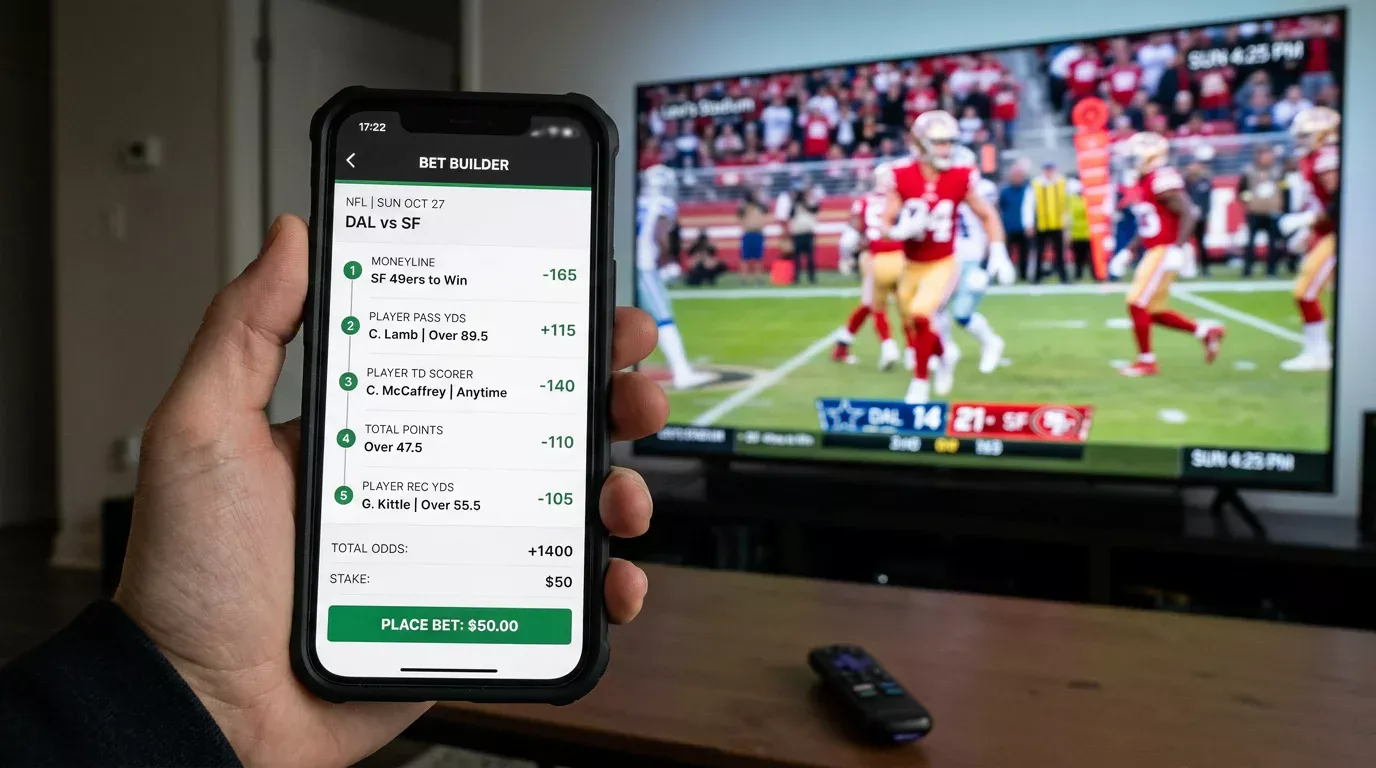
Odds on each side are typically priced near even money — you’ll see 10/11 on both over and under at most UK bookmakers, with the slight short-price reflecting the bookmaker’s margin. When money flows heavily to one side, the bookmaker adjusts either the line itself (moving from 48.5 to 49) or the odds on each side (making the over 5/6 while the under drifts to evens). These movements are informative: a line that opens at 47 and climbs to 49 before kickoff tells you that sharp money — or significant public volume — is backing the over.
One detail that trips up UK punters new to NFL: the total includes overtime scoring. If a game finishes 24-24 in regulation and goes to overtime where one team kicks a field goal to win 27-24, the total for settlement purposes is 51. This matters more often than you’d think — about 5% of NFL games reach overtime in a typical season, and those extra possessions can swing a total from under to over.
Factors That Move NFL Totals: Weather, Pace, and Injuries
My single biggest edge in totals betting comes from something most casual bettors barely glance at: the weather forecast at the actual stadium four hours before kickoff.
Wind is the primary totals killer. Rain affects footing and ball security, but wind directly suppresses passing efficiency, which is the engine of modern NFL scoring. When sustained wind speeds exceed 15 mph, passing yards per attempt drop measurably. Bookmakers adjust for extreme weather, but they often underreact to moderate wind conditions — 12 to 18 mph range — because the adjustment is less obvious. I’ve found consistent value betting unders in outdoor games with moderate wind, particularly when the initial total is set above 45.
Pace of play is the second major factor. NFL teams vary dramatically in how quickly they snap the ball between plays. A team that runs 70 plays per game creates more scoring opportunities than one averaging 58. When a fast-paced offence meets a slow, ground-oriented opponent, the total often reflects an average of both styles. But the fast offence’s tempo tends to pull both teams toward more total plays than the average suggests, because the defence is on the field more, fatigues faster, and surrenders longer drives. This asymmetry is underpriced in totals markets.
Injuries to quarterbacks and key offensive playmakers obviously affect totals, but the market adjusts for headline injuries quickly. The subtler edge comes from offensive line injuries. When a starting left tackle is out, the passing game compresses — shorter routes, quicker throws, fewer shots downfield. That reduces big-play scoring potential without necessarily reducing total offensive output. The market often overadjusts the total downward for O-line injuries, creating under-the-radar over value in games where the replacement lineman is competent but not dominant.
Quarter and Half Totals: Granular Scoring Markets
About two years ago I started splitting my totals analysis into halves, and it changed my results noticeably. Full-game totals average out the variance. Half and quarter totals expose the specific scoring patterns that actually drive results.
Most UK bookmakers now offer first-half totals, second-half totals, and increasingly, individual quarter totals for NFL games. The American sports betting market generated roughly $30 billion in NFL handle during the 2025 season, and this proliferation of granular markets is a direct response to bettor demand for more specific angles.
First-half unders are one of my most consistent NFL positions. Here’s why: NFL games tend to start conservatively. Teams script their opening drives, defences are fresh, and coaches are gathering information. Scoring rates in the first half tend to run below the pace implied by the full-game total. If a full-game total is set at 48.5, the first-half line might be 23.5 — but historical data often shows that first halves in similar matchups average closer to 20 points. That two-to-three-point gap isn’t always present, but when it appears, it’s a reliable lean.
Fourth-quarter totals are the opposite story. Trailing teams abandon the run, pass on every down, and play with urgency that inflates scoring. Late-game touchdowns in garbage time are the bane of full-game under bettors but the friend of anyone playing fourth-quarter overs. I use quarter totals selectively — the margins are higher than on full-game totals, so the edge needs to be correspondingly larger — but they offer a way to express a specific view about how a game unfolds without taking on the variance of the full 60 minutes.
Seasonal Scoring Trends and Historical Over/Under Data
NFL scoring is not constant across the season, and this is a detail that most totals bettors in the UK overlook. American football accounts for about 34% of all US sports betting handle, yet the seasonal scoring curve gets surprisingly little attention in the betting literature.
Early-season totals tend to be set based on the previous year’s scoring averages and offseason roster changes. But the first three weeks of an NFL season are notoriously unpredictable — new schemes, rust, players adjusting to new roles. Scoring tends to dip slightly in Weeks 1-3 compared to bookmaker expectations, which creates a mild structural lean toward unders in the season’s opening stretch.
By mid-season (Weeks 8-12), offences have settled into rhythm and scoring averages stabilise. Bookmaker lines become more accurate, and the edge in totals markets narrows. Late season — Weeks 14 through 18 — introduces new variables: cold weather in outdoor northern stadiums, teams eliminated from playoff contention either collapsing or playing loose, and playoff-bound teams potentially resting starters in Week 18. Each of these factors can skew scoring patterns in ways that full-season averages don’t capture.
For UK punters who also bet NFL spreads, totals offer a complementary angle. You don’t need an opinion on who wins to have a strong view on how much scoring happens. In weeks where the spread feels like a coin flip, the total can be the cleaner, more analytically grounded bet. I allocate roughly 30% of my weekly NFL action to totals, and in high-wind or extreme-weather weeks, that share climbs to 50% or more.
What does over 45.5 mean in NFL totals betting?
A total of 45.5 means the bookmaker expects the combined score of both teams to land around 45 to 46 points. If you bet the over, you need 46 or more combined points to win. If you bet the under, you need 45 or fewer. The half-point ensures there is no push — the bet always settles as a win or a loss.
Are NFL totals affected by weather conditions?
Yes, significantly. Wind is the most impactful factor, suppressing passing efficiency and reducing scoring potential in outdoor games. Rain and cold temperatures also affect ball handling and kicking accuracy. Bookmakers adjust totals for extreme weather forecasts, but moderate conditions between 12 and 18 mph wind often remain underpriced in the market.
Can I bet on quarter totals in the UK?
Most major UKGC-licensed bookmakers now offer quarter and half totals for NFL games, though the range is narrower than full-game totals markets. First-half totals are widely available; individual quarter totals are increasingly common at larger platforms. Margins on these granular markets tend to be higher than on full-game totals.
Created by the ”Best bet for nfl” editorial team.