NFL London Games Betting: Fixtures and Travel Impact
 Available in US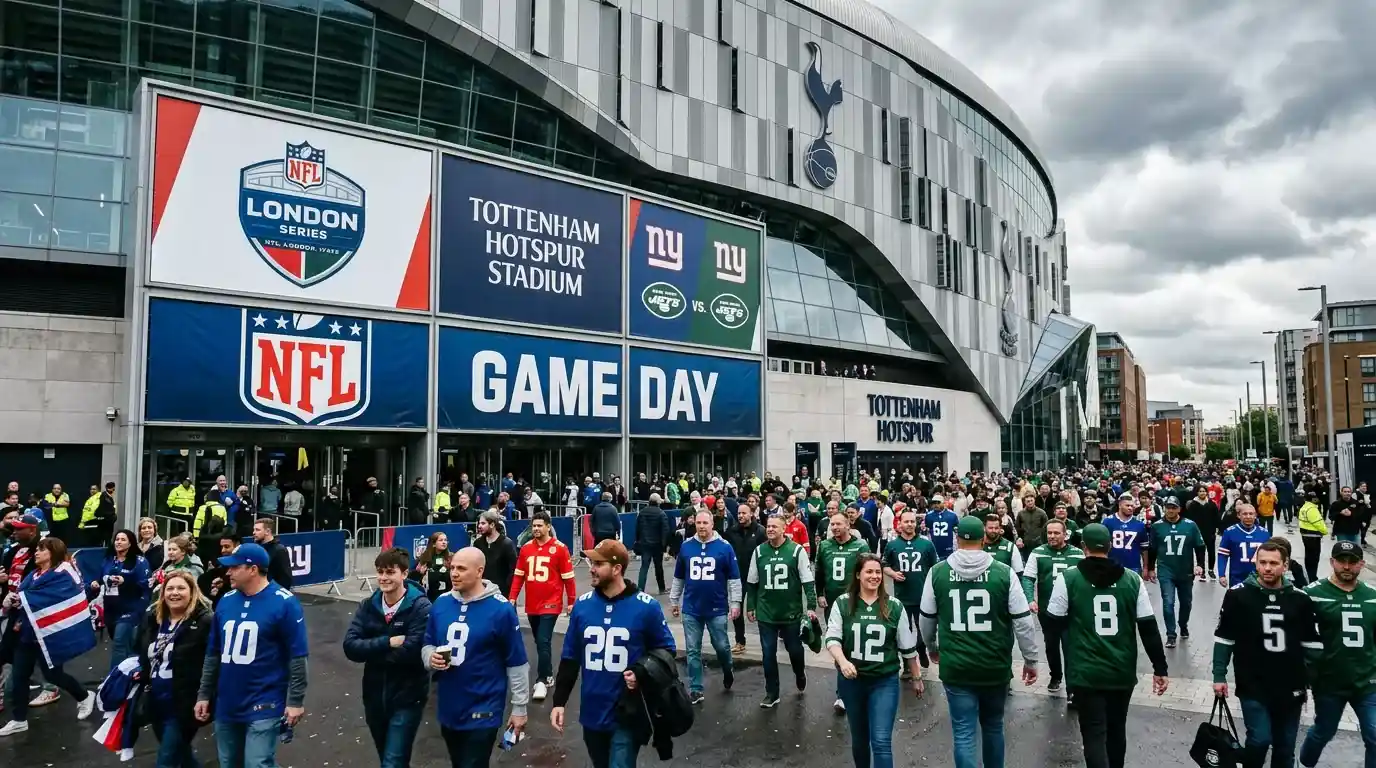
I was at Tottenham Hotspur Stadium for one of the 2023 London games — standing in the concourse, pint in hand, watching thousands of UK fans in replica jerseys from 20 different teams. The atmosphere was unlike anything I’d experienced at a regular Premier League match. And the betting angles? Completely different from a standard Sunday slate game played in Kansas City or Green Bay. That afternoon taught me that NFL London games aren’t just another fixture on the schedule — they’re a distinct betting category with their own dynamics, edges, and traps.
The NFL has played 42 regular-season games in the United Kingdom since 2007, and the programme continues to expand. These games offer UK punters something rare: an NFL match in their own time zone, on their own turf, with atmosphere they can experience firsthand. But from a wagering perspective, London games introduce variables that don’t exist in any other NFL context — and those variables create pricing inefficiencies that informed bettors can exploit.
Growth of NFL London Games and Betting Markets
The numbers tell the growth story better than any marketing pitch could. Since the inaugural London game in 2007 — a Dolphins-Giants affair at the old Wembley — the programme has generated a cumulative economic impact exceeding two billion pounds for the UK. The record attendance for a single London game stands at 86,651, set when the Jaguars hosted the Patriots at Wembley in 2024. More than six million people watched the 2025 London games on television or streaming platforms, a new record for the league’s international fixtures.
Three regular-season games were played in London during 2025, bringing the all-time total to 42. The venue rotation now splits between Wembley Stadium and Tottenham Hotspur Stadium, with Tottenham’s purpose-built NFL configuration offering a tighter, more American-feeling game-day experience. Henry Hodgson, General Manager of NFL UK and Ireland, has spoken about how the London games serve a dual purpose — engaging existing fans while creating new audiences and driving NFL fandom in the market.
For bettors, this growth translates directly into deeper markets. Five years ago, London game betting options at UK bookmakers were sparse — a moneyline, a spread, maybe a handful of totals. Now, the betting menu for London fixtures mirrors what you’d find on any primetime domestic NFL game: full prop markets, live betting, bet builders, and often enhanced-odds promotions tailored to the UK audience.
Betting Angles Unique to London Games
Here’s what I’ve learned from analysing every London game since 2018: the standard analytical framework you’d apply to a regular-season NFL game needs significant adjustment for these fixtures. Three factors dominate.
Travel fatigue is the most discussed and least precisely measured variable. Both teams fly across the Atlantic, but the impact isn’t symmetrical. West Coast teams — those based in the Pacific time zone — face an eight-hour time difference. East Coast teams face five hours. Teams coming from the Central or Mountain time zones fall somewhere between. The data I’ve tracked suggests that West Coast teams underperform against the spread in London at a higher rate than East Coast teams, though the sample size (42 total games) makes definitive conclusions difficult.
The second angle is preparation disruption. Teams typically arrive in London on Wednesday or Thursday, which means their final week of practice is compressed or held in unfamiliar facilities. Some teams handle this better than others — the Jacksonville Jaguars, who’ve played more London games than any other franchise, have built institutional knowledge around the logistics. Teams making their London debut, by contrast, often show signs of disorientation that manifest as early-game sloppiness: penalties, miscommunications, and slow starts.
The third factor is the “neutral site” dynamic. Neither team has a genuine home-field advantage in London. The designated “home” team doesn’t benefit from the crowd noise patterns, stadium familiarity, or local fan base pressure that home-field advantage normally provides. This effectively removes a variable worth approximately 2.5 to 3 points in standard spread calculations. Bookmakers adjust for this, but in my experience, they don’t always adjust enough — particularly when a strong home team is the designated host. The crowd in London is enthusiastic but split in allegiance, which mutes the acoustics-driven advantage that matters in real home games.
Home-Team Disadvantage and Neutral-Site Dynamics
The concept of home-field advantage in American football is well-established and baked into spread pricing: home teams typically get a 2.5 to 3-point handicap boost. In London, that boost should theoretically disappear, but I’ve observed that bookmaker adjustments vary. Some reduce the home-field factor to zero; others seem to retain a residual 1 to 1.5 points, possibly because the “home” team still gets to use their preferred sideline and make the first choice on uniform colour.
For sharp bettors, this residual creates an angle. If the bookmaker is giving even a single point of credit for “home-field” advantage in a London game, and that advantage doesn’t actually exist, the underdog’s spread is a point better than it should be. Over 42 games, underdogs have covered the spread at a rate that suggests this pricing inefficiency is real, though it fluctuates by year and by how well the specific bookmaker models international fixtures.
The kickoff time adds another wrinkle. London games typically start at 2:30 PM or 6:00 PM UK time, which translates to morning hours in the US. Players’ circadian rhythms are disrupted regardless of when they arrived in London, and the earlier kickoff may particularly affect teams accustomed to 1:00 PM or 4:25 PM Eastern starts. This is speculative — we lack controlled studies — but it’s a factor I weigh when the line feels close.
Where to Bet on NFL London Fixtures in the UK
London games enjoy the fullest betting coverage of any NFL fixture at UK sportsbooks, for obvious reasons — they’re the home-market games. The UK is home to more than 17 million NFL fans, and London game weekends represent peak NFL betting interest domestically. Every major UKGC-licensed bookmaker goes deep on these fixtures: extended prop markets, enhanced odds promotions, and live betting interfaces that are often more responsive for London games than for standard 6 PM Sunday kickoffs (which coincide with higher overall platform traffic).
The practical edge for UK punters betting London games is proximity to information. You can follow the teams’ arrival in London, see social media reports from practice sessions at London parks and stadiums, and gauge the atmosphere in ways that aren’t possible for a game being played 5,000 miles away. I’ve found that following the teams’ London itineraries — when they arrived, where they’re staying, whether key players looked comfortable at public events — occasionally provides soft information that the lines haven’t fully absorbed.
One strategic note: rest and schedule edges matter intensely for London games. Pay close attention to what each team did the week before and what their schedule looks like the week after. Teams on a bye week following a London game face no post-travel disadvantage, while teams that must fly back to the US and play the following Sunday often show fatigue. Some bettors focus less on the London game itself and more on the “London hangover” effect in the subsequent week — and there’s meaningful data supporting that approach.
Do NFL London games have different betting markets?
NFL London games receive the same core betting markets as any regular-season NFL game — moneyline, spread, totals, props, and live betting. At UK bookmakers, London fixtures often receive enhanced coverage with additional prop markets and promotional offers. The market depth for London games typically matches or exceeds that of primetime domestic US games.
Does jet lag affect NFL London game outcomes?
Travel fatigue is a real factor in London games, though isolating its precise impact is difficult with only 42 total games in the sample. West Coast teams face the largest time-zone shift (eight hours) and have historically shown signs of underperformance. However, teams now receive additional preparation time and travel support, which may mitigate the effect compared to earlier seasons.
Prepared by the Best bet for nfl editorial staff.